


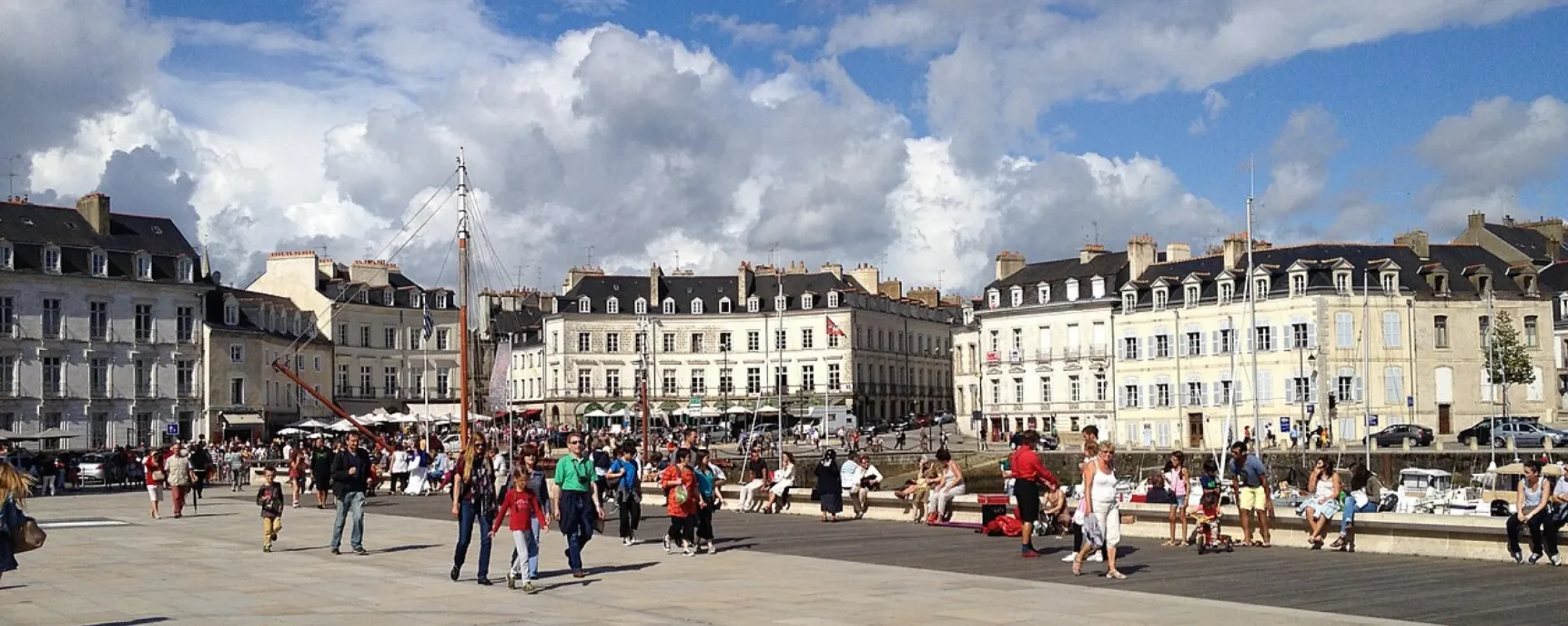
At the start of the 2026 school year, Morbihan reaffirmed its status as a department where people start businesses and choose to live. Vannes, the department’s capital, topped the 2026 “Dream Cities” rankings in January 2026 in the mid-sized cities category—a ranking based on more than 150 data sources (nature, health, safety, sports, quality of life, etc.). This sends a strong signal to any entrepreneur still weighing their options between different regions when deciding where to launch their business.
But beyond the image, what do the official statistics actually show? How many businesses are started each year in Morbihan? Who are these entrepreneurs? In which sectors do they operate, and what kinds of assistance do they receive? This article is based exclusively on data from theBpifrance Création’s Business Creation Observatory, the Brittany Region, and the Vannes metropolitan area to provide a factual overview that will be useful to anyone considering starting or establishing a business in the department.
1. How many businesses are actually being started in Morbihan?
Morbihan saw 9,682 new businesses established in 2025, accounting for slightly more than one in five new businesses in Brittany, according to the latest report from the Business Creation Observatory (Bpifrance Création). Relative to the population, this amounts to 120 new businesses per 10,000 residents—a figure close to the regional average but still below that of metropolitan France excluding the Île-de-France region.
This trend is gaining momentum, driven almost exclusively by micro-entrepreneurs: the number of businesses they start has risen by nearly 6% year-over-year, while traditional businesses have declined by 2%. Morbihan’s economic fabric is renewing itself at a slightly slower pace than the national average but has continued to grow steadily since 2012.
And this momentum is continuing this year: in June 2026, the department recorded 922 new business start-ups, nearly 16% more than a year earlier—a trend that mirrors that of Brittany as a whole, which has seen steady growth since the beginning of the year. All of these signs reinforce the idea that the start of the 2026 school year will be a particularly favorable time to launch a business.
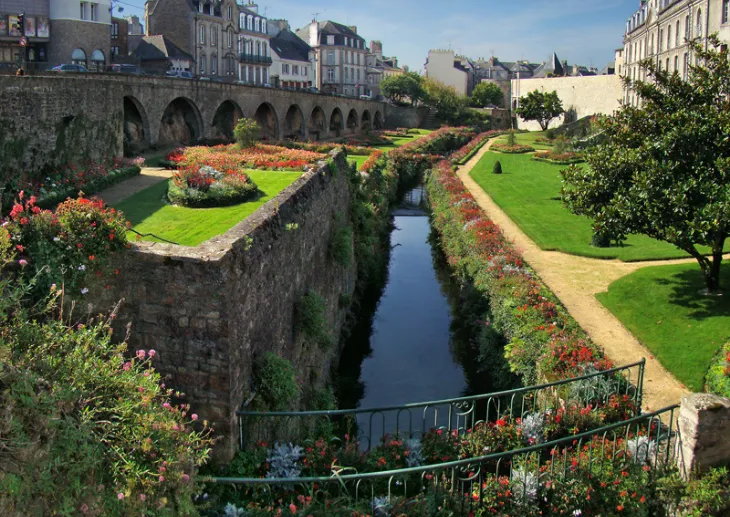
2. Who’s behind it? The face of the Morbihan entrepreneur
-
2.1 Micro-enterprises account for the vast majority
Nearly 63% of entrepreneurs in Morbihan choose micro-enterprise status when starting their businesses. It’s a logical choice: this status, widely favored for its administrative and tax simplicity, remains the preferred starting point for testing a business before potentially transitioning to a more structured legal structure.
-
2.2 But societies are changing
On the corporate side, things are changing as well. Entrepreneurs who structure their projects from the outset are gradually moving away from the SARL in favor of the SAS or SASU, the number of which is growing significantly faster. This growing preference can be explained by the statutory flexibility and the ease of opening up the company’s capital that these legal structures offer, even for projects that do not plan to start out under the micro-social regime.
-
2.3 Companies with no employees—or almost none
Another key takeaway: For the vast majority of entrepreneurs, starting a business in Morbihan remains first and foremost a personal venture rather than a project aimed at creating jobs. Between 90 and 95 percent of new businesses start without employees, and only a handful of them hire right from the start. This is a reality to keep in mind when planning the scale of your project: hiring is generally not the first step but often the result of an already established business.
3. Which sectors are driving job creation?
Unsurprisingly, the service sector is driving most of the growth in Morbihan, with nearly 5,500 new jobs created in 2025 and a 9% year-over-year increase. Leading the way in terms of volume are consumer services, commercial cleaning, and business consulting—three sectors that require little initial investment.
However, the most impressive growth is found elsewhere. Professional event planning, corporate headquarters, and event catering are posting double-digit—or even triple-digit—growth rates. More broadly, consulting, digital services, and business support continue to confirm their status as high-growth sectors year after year, with new business startups increasing by an average of more than 5% annually since 2012—a particularly favorable environment for those looking to enter these markets.
Conversely, a few sectors are treading water, notably financial services and independent electricity generation, where new business has fallen sharply year-over-year—two sectors that tend to show more erratic growth from one year to the next.
Discover our locations in Vannes
BURO Club invites you to discover these two business centers in Vannes, located in the heart of the Ténénio and Laroiseau neighborhoods. Take advantage of meeting rooms and private, flexible office spaces in the heart of Morhiban.
4. Where to set up shop: Startups are concentrated in cities
Morbihan remains a department where business creation occurs primarily in urban areas: More than 4 out of 10 new businesses are concentrated in the department’s urban municipalities, as defined by INSEE’s municipal density classification (densely populated or moderately dense municipalities), compared to a marginal share in independent rural municipalities. And, unsurprisingly, Vannes is by far the leader.
This trend is reflected in the commercial real estate market: according to the Golfe du Morbihan–Vannes Metropolitan Area Commercial Real Estate Observatory, one out of every two commercial real estate transactions takes place in Vannes within the metropolitan area. Driven by a more diversified supply and the appeal of its service and commercial hubs, the city is home to a consistently dynamic market, with transactions and leased space showing a sharp increase and downtown office rents on the rise again.
This economic appeal is matched by an equally impressive residential appeal: Vannes has just taken the top spot in the 2026 national “Dream Cities” rankings, dethroning Annecy after several years of dominance. The city posted an overall score of 86.5 out of 100, ranking 1st out of 113 in the medium-sized cities category and 2nd overall in France, with a particularly strong showing in climate projections through 2050 (81 out of 100) and a solid score in transportation accessibility (63 out of 100). For a project developer, this indicator of residential attractiveness can serve as a selling point when recruiting.
That said, the city does not have a monopoly on opportunities. At the departmental level, areas benefiting from business relocation assistance programs are also capturing a significant share of this momentum: slightly more than one in five new businesses is established in an “Action Cœur de Ville” zone, a comparable proportion in “Small Towns of Tomorrow” or “France Ruralities Revitalization” zones—designations that entitle businesses setting up shop there to specific tax benefits.


4. Where to set up shop: Start-ups are concentrated in cities
Morbihan remains a department where business creation occurs primarily in urban areas: More than 4 out of 10 new businesses are concentrated in the department’s urban municipalities—as defined by INSEE’s municipal density classification (densely populated or moderately dense municipalities)—compared to a negligible share in independent rural municipalities. And, unsurprisingly, Vannes leads by a wide margin.
This trend is reflected in the commercial real estate market: according to the Golfe du Morbihan–Vannes Metropolitan Area Commercial Real Estate Observatory, one out of every two commercial real estate transactions takes place in Vannes within the metropolitan area. Driven by a more diversified supply and the appeal of its service and commercial hubs, the city boasts a consistently dynamic market, with transactions and leased space showing a marked increase and downtown office rents on the rise again.
This economic appeal is matched by an equally striking residential appeal: Vannes has just taken the top spot in the 2026 national “Dream Cities” rankings, dethroning Annecy after several years of dominance. The city posted an overall score of 86.5/100, ranking 1st out of 113 in the medium-sized cities category and 2nd overall in France, with a particularly strong showing in climate projections for 2050 (81 out of 100) and a solid score in transportation accessibility (63 out of 100). For a project developer, this indicator of residential attractiveness can serve as a selling point for recruitment.
That said, the city does not have a monopoly on opportunities. At the departmental level, areas benefiting from business relocation assistance programs are also capturing a significant share of this growth; slightly more than one in five new businesses is established in an “Action Cœur de Ville” zone, a comparable proportion in “Petites Villes de Demain” (Small Towns of Tomorrow) or “Zone France Ruralités Revitalisation” zones—designations that entitle businesses setting up shop there to specific tax benefits.
5. Available Assistance and Support
Starting a business in Morbihan also means being able to rely on a structured regional support ecosystem.
The flagship program remains the PASS Création, funded by the Brittany Region and the European Union. It offers completely free, individualized support structured in three stages:
- assistance with project development (up to 6 months),
- structuring the financing plan (up to 6 months),
- post-launch support that can last up to 36 months to ensure sound initial management decisions.
This program can be supplemented by themed group workshops and is intended for any project leader who has already defined the nature of their business start-up or acquisition; it is not designed for projects still in the early stages of development.
In addition to these regional programs, there are national assistance programs available throughout Brittany, such as a partial exemption from social security contributions during the first 12 months of operation, or zero-interest honor loans offered by nonprofit financing networks (notably Initiative Bretagne), which bolster equity capital without requiring personal guarantees and facilitate access to additional bank credit.
Locally, the Golfe du Morbihan metropolitan area – Vannes metropolitan area also offers support for securing real estate, with two business incubators designed for new local businesses, as well as assistance in identifying the geographic areas and types of facilities (offices, business premises, workshops) best suited to each project.
6. Three Questions to Ask Yourself Before Choosing a Location
-
Is it a city or a designated area?
Setting up a business in Vannes or another densely populated urban area means benefiting from a wider range of real estate options, a larger pool of customers and talent, and a strong regional brand image. On the other hand, setting up shop in a rural community eligible for ZFRR (Rural Revitalization Zones) or Regional Development Assistance Zones offers specific tax benefits, with business renewal rates in these areas sometimes exceeding the departmental average. The right choice depends above all on the nature of the business (local retail, skilled trades, business services) and its target customer base.
-
Office, virtual office, or coworking space?
A business owner in the seed stage does not necessarily need a traditional commercial lease right from the start. The business address in Vannes provides a credible business address without disproportionate fixed costs, while a flexible office or coworking space offers a functional work environment without a long-term commitment. This choice can evolve as the business grows, without the need to commit to a multi-year lease from the moment the business is first registered.
-
What role does remote work play?
The issue goes beyond simply choosing a work status. According to the INSEE-DARES study from March 2025, 22% of private-sector employees work remotely at least once a month, averaging about 1.9 days per week, in a model that is now overwhelmingly hybrid rather than “fully remote.” For an entrepreneur in Morbihan, this means that a hybrid work model (regular in-person presence in an office or shared workspace, supplemented by remote work) now meets the expectations of the majority of employees and job candidates, even outside major metropolitan areas. It is also a factor in the region’s appeal: the quality of life in Brittany, combined with the option to work in person on an occasional basis rather than full-time, is playing an increasingly important role in where workers choose to settle.
FAQ
Which sector hires the most entrepreneurs in Morbihan?
Business and consumer services lead in terms of volume, particularly business consulting, professional cleaning, and other personal services. Meanwhile, digital, consulting, and corporate headquarters-related activities are showing the strongest growth.
Should you start a micro-business or a corporation in Morbihan?
It depends on the project. The micro-entrepreneur status—chosen by nearly 63% of business founders in Morbihan in 2025—is well-suited for testing out a business with minimal administrative requirements. A corporation (SAS, SASU, SARL) becomes a viable option when the project requires investment, partners, or a more protective legal structure.
Where in Morbihan should you set up shop to maximize your chances?
Dense urban areas, particularly Vannes, account for the vast majority of new commercial real estate developments and transactions in the department. In contrast, some rural municipalities offer tax benefits through ZFRR or AFR zoning, which should be evaluated based on the nature of the business.
What kinds of assistance are available for starting a business in Morbihan?
The Brittany Region's PASS Création program, which is free of charge, supports entrepreneurs from the planning stage through post-launch follow-up for 36 months. In addition, there are interest-free honor loans from nonprofit networks and national initiatives such as a partial exemption from social security contributions during the first year.
Is it possible to start a business without a permanent office in Vannes?
Yes. A business address service allows you to obtain a business address without renting office space—a solution frequently used during the startup phase before transitioning, if necessary, to a flexible office or a coworking space as the business grows.
Is remote work compatible with setting up a business in Brittany?
Absolutely. The hybrid model (partial in-office work supplemented by remote work) is now the norm for a large proportion of French employees, and it aligns particularly well with Brittany’s appeal as a place to live, allowing people to combine quality of life with occasional in-office work.
-
Ready-to-use workspaces to get started in Vannes
Once the project has been formalized and the location chosen, one very practical question remains: where will you work on a day-to-day basis? For an entrepreneur in the startup phase, committing to a traditional commercial lease isn’t always the best option. That’s exactly what BURO Club in Vannes offers, with several types of professional workspaces that don’t require a long-term commitment—suitable for both solo entrepreneurs and growing teams:


Ready-to-use workspaces to get started in Vannes
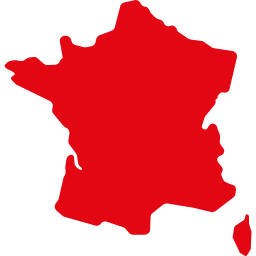
Once the project has been formalized and the location chosen, one very practical question remains: where will you work on a day-to-day basis? For a project founder in the startup phase, committing to a traditional commercial lease isn’t always the best option. That’s exactly what BURO Club in Vannes offers, with several types of professional spaces that don’t require a long-term commitment, suitable for both solo entrepreneurs and growing teams:
- BURO Club Vannes Laroiseau, located in the heart of a dynamic business district, offering fully equipped, ready-to-use offices.
- BURO Club Vannes, offering a professional address in the city center and easy access to all the services in the metropolitan area.
From business registration to flexible office spaces and event room rentals for your professional events, these centers allow you to launch and scale your Vannes operation at the actual pace of your business, without tied-up capital or multi-year commitments.