


In conjunction with Quality of Life and Working Conditions Week 2026, whose theme is “Management is a lot of work!”, BURO Club interviewed Luis Do Rosario Calcada, Director of Real Estate & Workplace Environment at La Mutuelle Générale. A firsthand account of the role that workspaces play in the quality of management and, more broadly, in the well-being of teams.
Manager in 2026: a profession that reinvents itself
Every year, the QWL week focuses on a topic at the heart of professional debate. In 2026, the focus is on management.
And with good reason: in a working world turned upside down by widespread telecommuting, dispersed teams and the search for meaning, good management has become a real challenge.
What does it mean to be a good manager today? It’s about creating the right conditions for everyone to work effectively, feel part of a team and find meaning in their tasks. This involves communication, of course, but also the physical environment in which work takes place.
This is where an often underestimated reality comes into play: the workspace is not neutral.
It influences the way teams interact, collaborate and feel. And in this area, companies that have dared to rethink their environments are today learning valuable lessons.

Meeting with Luis Do Rosario Calçada
Director of Real Estate & Work Environment La Mutuelle Générale
A context of profound transformation
As the long-standing mutual insurance company for active and retired employees of La Poste and Orange, La Mutuelle Générale has undergone a major organizational transformation over the past two years.
The creation of a subsidiary dedicated to the management of certain activities and the employees attached to them led to an in-depth review of real estate requirements: staff redeployed, surface areas that had become too large, and a company agreement allowing up to four days of telecommuting per week.
It is against this backdrop that La Mutuelle Générale decided to shift some of its office locations to business centers, a model it has been testing since 2019—well before the pandemic made this type of approach commonplace in the workplace. A truly pioneering choice.
I am the Director of Real Estate and Workplace Environment. My team of ten people oversees three main areas: building services, user services, and asset management. We operate nationwide, including our overseas territories, and have a presence in every department in France, as well as in Guadeloupe, Martinique, French Guiana, and Réunion.
Luis Do Rosario Calcada
We have not been welcoming the public to our premises since January 1, 2025. We have transitioned from a retail-style commercial space to an office setting. With far fewer employees and reduced space requirements, we needed to streamline our real estate portfolio. Business centers have provided a consistent response to this reality.
Luis Do Rosario Calcada
Are your current premises adapted to the new
how your teams work?
Fighting isolation: the manager's No. 1 challenge
With teams spread out across different locations and widespread use of remote work, employee isolation quickly emerged as the main managerial challenge to be addressed. At some of La Mutuelle Générale’s sites, there was only one employee present. Coming to the office and finding oneself alone all day is a situation that takes a toll on motivation and well-being.
At some locations, we had only one employee. Coming into the office and being alone all day isn't very stimulating, and it eventually takes its toll. Isolation is a real issue that affects employee motivation and well-being.
Luis Do Rosario Calcada
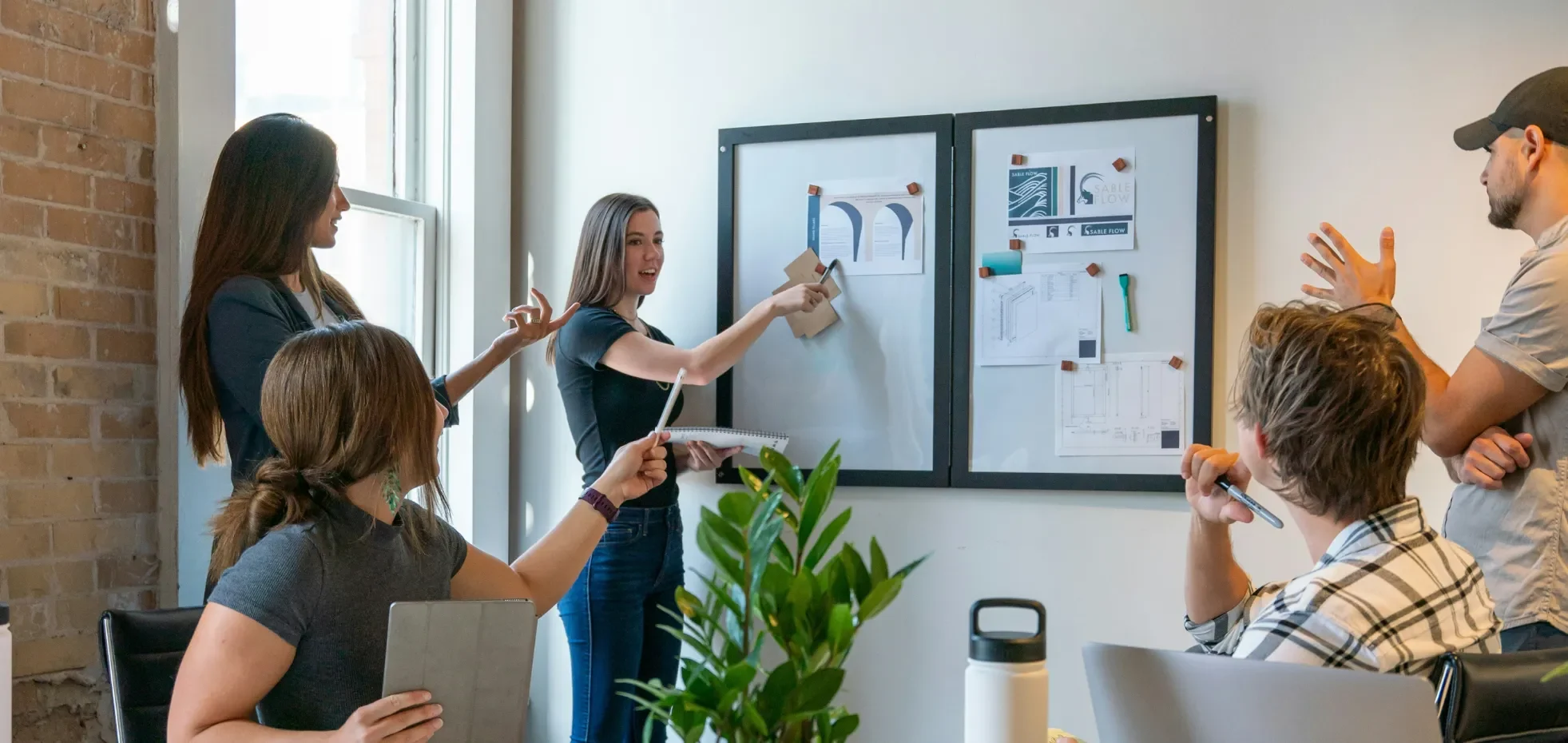
But integrating employees into business centers is not enough. The manager’s role remains central: maintaining links from a distance, working on team cohesion, organizing collective moments. This is precisely where flexible workspaces become a managerial tool: they enable a dispersed team to be brought together in a professional and convivial setting, for the duration of a meeting, workshop or working lunch.
Placing an employee in a business center means providing them with a stimulating, high-quality professional environment. But a manager’s job also involves going a step further: fostering team spirit and maintaining connections among team members. Group activities and in-person meetings remain essential.
Luis Do Rosario Calcada
BURO Club spaces in everyday life: more than just offices

About a quarter of our fleet is currently housed in business centers. We are currently conducting a satisfaction survey to gather feedback from our users. But I truly believe that our employees appreciate these features: the break and dining areas, the large meeting rooms for group activities, the reception area, mail handling, and the events organized by the centers... Accessibility via public transportation and accessibility for people with disabilities are also important factors for us.
Luis Do Rosario Calcada
Hospitality: the detail that makes all the difference
Of all the services available at a business center, Luis Do Rosario Calçada identifies the hospitality aspect as the most memorable and the key differentiator compared to a traditional lease. This term encompasses specific services: organizing meetings with catered meals, welcoming external participants, and providing large rooms configured to meet specific needs— all handled by the center’s staff.
In organizations where teams are scattered all over the country, these face-to-face get-togethers take on a special value. They are more than just operational meetings: they are key moments of cohesion, when the executive sends out a message. A warm welcome, a shared meal, bringing teams together in a pleasant, professional environment – these are concrete ways for managers to let their staff know that they count.
This kind of setup simply wouldn't have been possible in our old office. Hosting a working lunch "in-house" under the right conditions, with the care it requires, sends a strong message to the teams.
Luis Do Rosario Calcada
It also offers a significant operational advantage: there’s no longer any need to manage building services or internal logistics, or to coordinate catering, the venue, and equipment. The business center handles everything, freeing up the manager to focus on what matters most: the content of the meeting and the quality of the discussions.
3 levers to turn space into a management tool
- Meeting rooms designed for productive discussions One-on-one meetings, HR interviews, strategic meetings: all of these situations call for a neutral, quiet, and professional space. Meeting rooms in business centers provide this setting, away from the visual hierarchy of a typical office. Simply changing locations alters the dynamics of the conversation.
- Coworking to Combat Isolation at Work Working from home four days a week offers a welcome sense of freedom, but it also carries a real risk of isolation. Coworking in a business center recreates what working from home cannot offer: the presence of other professionals, informal interactions, and the sense of belonging to a work community.
- Fully equipped offices for remote and dispersed teams For companies with teams located across the country, fully equipped offices in business centers offer a solution that combines contractual flexibility, a high-quality work environment, and cost control.
A point of vigilance not to be overlooked
Luis Do Rosario Calçada also highlights the limitations of the model: a business center service contract entails a degree of dependence on the operator. The company does not have control over its environment.
His advice: Be cautious in medium-sized cities (with fewer than 50,000 residents), where housing supply may be more limited and less stable over the long term.
Workplace quality is superior in business centers. Without a major investment, you can provide your teams with a high-quality work environment. And economically, when comparing the total cost of a managed space with that of a traditional lease—including the renovation work that such leases sometimes entail— the difference can be significant, in favor of business centers.
Luis Do Rosario Calcada
Getting organized to work well
QWL is not just a matter of human resources or social policy. It is also, and perhaps above all, a question of the concrete organization of work. And in this organization, space has a fundamental role to play.
The work environment contributes to a company’s image, its ability to recruit and retain staff, and the productivity of its teams. Functional, well-designed, accessible spaces send a strong signal to employees that their comfort and efficiency count.
Quality of life at work is a key driver of productivity and a company’s appeal.
Luis Do Rosario Calcada
Would you like to know whether your spaces are serving your brand and retaining your talent?
* See conditions