


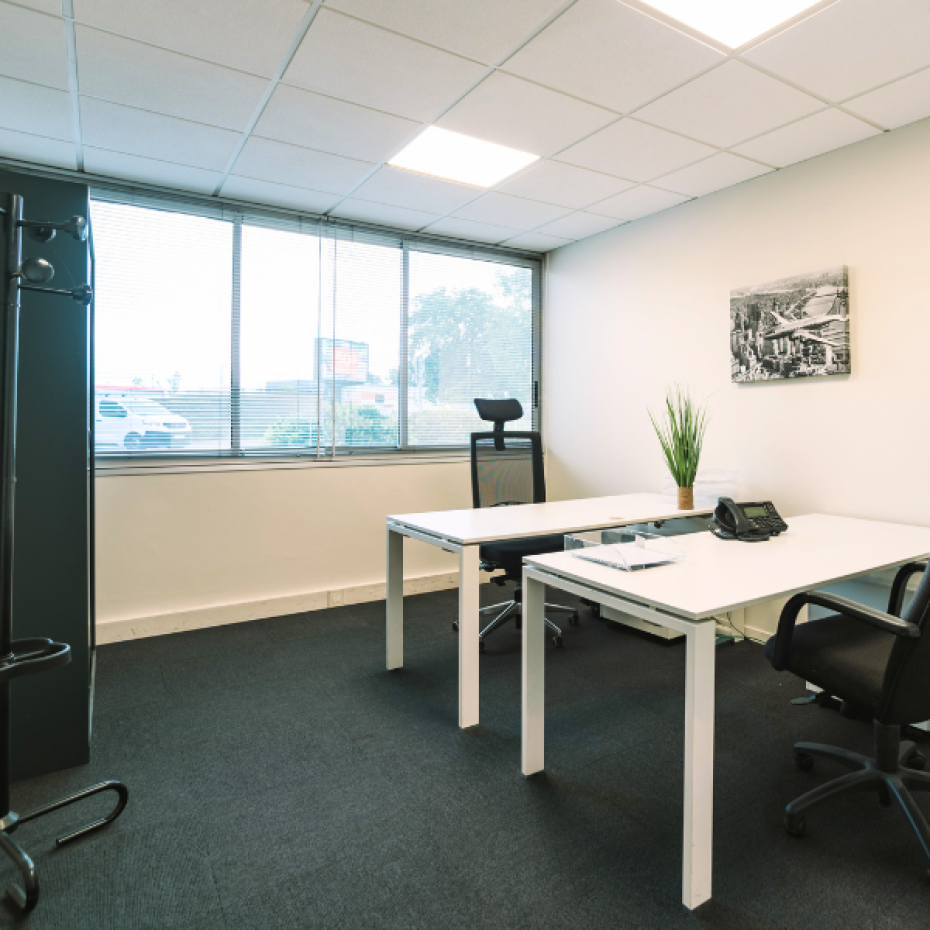
In a rapidly changing working environment – with the rise of telecommuting, hybrid models and the need for flexibility – many companies are moving away from large, costly and unsuitable office blocks. Instead, they are opting for smaller offices that are easier to manage, more economical and, above all, better suited to their real needs.
This trend concerns freelancers, start-ups and project teams alike. Small space is no longer a default choice: it’s becoming a strategic, efficient and rational solution. Here’s why it’s so attractive, and how to make the most of it.
Why opt for a small surface area?
At BURO Club, a 1 or 2 workstation office is available from €500 / month, a particularly competitive solution for a start-up entrepreneur or small team. For occasional use, daily rentals start at €40 excl. tax, while in Paris, where rents are traditionally very high, it’s possible to rent an office from €600 excl. tax/month, a rare price positioning in the capital.
Beyond their cost, small spaces are also extremely well suited to new organizations. A team of two or three people doesn’t need a 100 m² office to work effectively: a private office that’s well laid out, quiet and ergonomic is more than enough. This is BURO Club’s approach: we think in terms of the number of workstations, not square meters, in order to offer a space that is truly sized for its purpose.
This format is ideal for freelancers, consultants, very small businesses, start-ups in the structuring phase or temporary project teams. It allows you to occupy a professional office with no long-term commitment, no initial investment and no unexpected charges.
Finally, a small surface area is a real asset when it comes to productivity. An office focused on the essentials – an ergonomic chair, functional furniture and a high-performance connection – encourages concentration and limits the distractions associated with large open spaces.
What types of small offices are available for rent?
There are many options, but three main categories stand out.
The most common is the small private office, a closed, equipped and ready-to-use space. This is the preferred solution for professionals who want to work in a quiet, confidential and professional environment. Offices with 1 or 2 workstations are particularly sought-after for their simplicity and excellent value for money.
There are also private shared offices, which enable small teams (often of 3 to 6 people) to work together in a dedicated space. This model encourages collaboration while avoiding the constraints of fully open coworking.
Finally, for those looking for the most cost-effective solution, small coworking spaces are the ideal alternative. They provide access to a fully-equipped workstation in a professional setting, without the cost of a private office. It’s a formula often adopted by mobile workers, freelancers or start-ups in their testing phase.
In all cases, the services included are a key element: furniture, internet, utilities, maintenance, reception, access to meeting rooms… At BURO Club, they are integrated into the offer, enabling companies to control their budget from day one.





Efficient office design in a small space
Layout plays a key role in the success of a small office. Contrary to popular belief, a small space can offer excellent working comfort, provided it is well thought out from the outset.
A compact office should feature functional and ergonomic furniture, adapted to daily use: well-sized workstations, comfortable armchairs, integrated storage to limit visual clutter. Circulation must remain fluid to avoid any feeling of narrowness.
Brightness is also essential. A bright space, with natural or well-distributed artificial lighting, improves concentration and reduces fatigue. Air conditioning, sound insulation and air quality all contribute to well-being, even in a small space.
In business centers like BURO Club, offices are designed to optimize every useful metre, integrating these layout constraints from the outset. This enables companies to benefit from immediately operational space, without compromising on comfort.
Why think in terms of “jobs” rather than square meters?
When it comes to leasing a small office, thinking in terms of square meters alone can be misleading. A standard lease often includes unproductive areas: corridors, technical zones, nooks and crannies that are difficult to use. These spaces are billed for, without contributing to work efficiency.
On the other hand, small-scale office rental, based on the number of workstations, concentrates on the surface area that is really useful. Each space is designed to accommodate one or more employees in optimal conditions, without wasting space or incurring unnecessary costs.
This way of thinking provides several guarantees:
- controlled working comfort thanks to bright, air-conditioned, ergonomic offices,
- better equipment with adapted furniture and included services,
- and above all greater efficiency, as the space is designed to encourage concentration and productivity.
It’s this logic that allows small surfaces to be fully functional, even for daily and professional use.
Minimum surface area for an office: what do the standards say?
The question of the minimum surface area of an office is often raised by companies wishing to rent an optimized space. The recommendations ofAFNOR generally recommend between 10 and 15 m² per person, depending on the nature of the activity, the equipment required and the time spent at the workstation.
These standards form a reference base, but they need to be adapted to the reality of today’s uses. In business centers, spaces are designed to be optimized, integrating furniture, storage and circulation in an intelligent way.
At BURO Club, this approach makes it possible to offer small offices that are perfectly in line with comfort requirements, without unnecessarily oversizing the space. The aim is not to multiply square meters, but to guarantee an efficient, functional and pleasant surface, adapted to the number of workstations occupied.
Mistakes to avoid when renting a small surface area
There are a few classic traps that are easy to fall into.
- The first mistake is to choose a space solely on the basis of price. A very affordable but remote, noisy or ill-equipped office can become counter-productive and generate hidden costs in transport, equipment or wasted time.
- The second mistake is failing to anticipate growth. A start-up company planning to hire quickly needs to choose a flexible contract that allows it to grow into a larger office, without excessive costs or binding commitments.
- The third mistake is to neglect the services included. Internet, utilities, cleaning, furniture, maintenance: these services represent a significant proportion of the budget for a traditional office. Forgetting them when making a comparison can distort the final calculation.
- Finally, choosing a lease that is too rigid is a real risk for small businesses. A 3-6-9 lease leaves little room for maneuver in the event of strategic change or unforeseen circumstances.
How do you choose the right small surface?
There are a number of decisive criteria when it comes to choosing an office.
Location comes first. A well-connected office reduces commuting times and boosts team punctuality. This is particularly true in major cities, where BURO Club has numerous centers:
in Paris, ideal if you don ‘ t want to sacrifice your cash flow while benefiting from a prestigious address, and in regional cities such as Lyon, Bordeaux, Marseille, Toulouse or Nantes, perfect for a small satellite office in the city center, close to transport and your customers.
Ergonomics is a second essential criterion: even a small surface area must offer a pleasant, bright, well-furnished environment that’s comfortable enough for daily use. A well-thought-out office can be more efficient than a large area that is poorly exploited.
The length of the commitment must also be taken into account. Many small businesses need a flexible lease, capable of evolving in line with changes in headcount or new market opportunities. This is one of the advantages of business centers: contracts are generally more flexible than in traditional real estate.
Finally, shared services can make all the difference. Access to meeting rooms, a relaxation area or a professional reception desk adds real value to an optimized office, without significantly increasing costs.
Should I opt for a small office?
Opting for a small office is no longer a compromise: it’s a strategic decision that enables you to control costs, optimize workspace and remain agile as your team grows. Whether you opt for a private office, a small open space or a small coworking space, choosing the right surface and the services included makes all the difference in terms of productivity and comfort.
To discover modular offices tailored to your needs, benefit from a turnkey space and test the flexibility of an optimized workstation, discover our office rental offers and reserve your space today.


Would you like to rent office space in a business center?
Boost your business with the flexibility of the BURO Club network. Whether you’re self-employed or a very small business, you’ll have immediate access to scalable office space from one position, in the heart of a network of over 100 towns and cities in France. More than just a space, you’ll benefit from the support of our experienced business managers and total mobility, including two free days of office space every month in the center of your choice.
* See conditions
FAQ – Small office rental
Yes, the price per square metre of a small surface is generally higher than that of a large one. However, the overall cost is significantly lower, because the leased area is smaller and services are included, thus limiting expenditure on fixtures and fittings, maintenance and fixed charges.
The possibility of negotiating depends mainly on the location, the rental period and the occupancy rate of the business center. Renting over several months, or being flexible about the date of entry, can sometimes lead to more advantageous rates.
Yes, for small structures, a furnished office is often the simplest and most cost-effective solution. It avoids initial investment in furniture, enables rapid installation and generally includes essential services, making day-to-day management of the workspace easier.
For a small surface area, a short-term or flexible lease is generally more suitable than a standard commercial lease. It offers greater flexibility, limits long-term financial commitments and makes it easy to adjust the leased surface area in line with changes in business activity.